
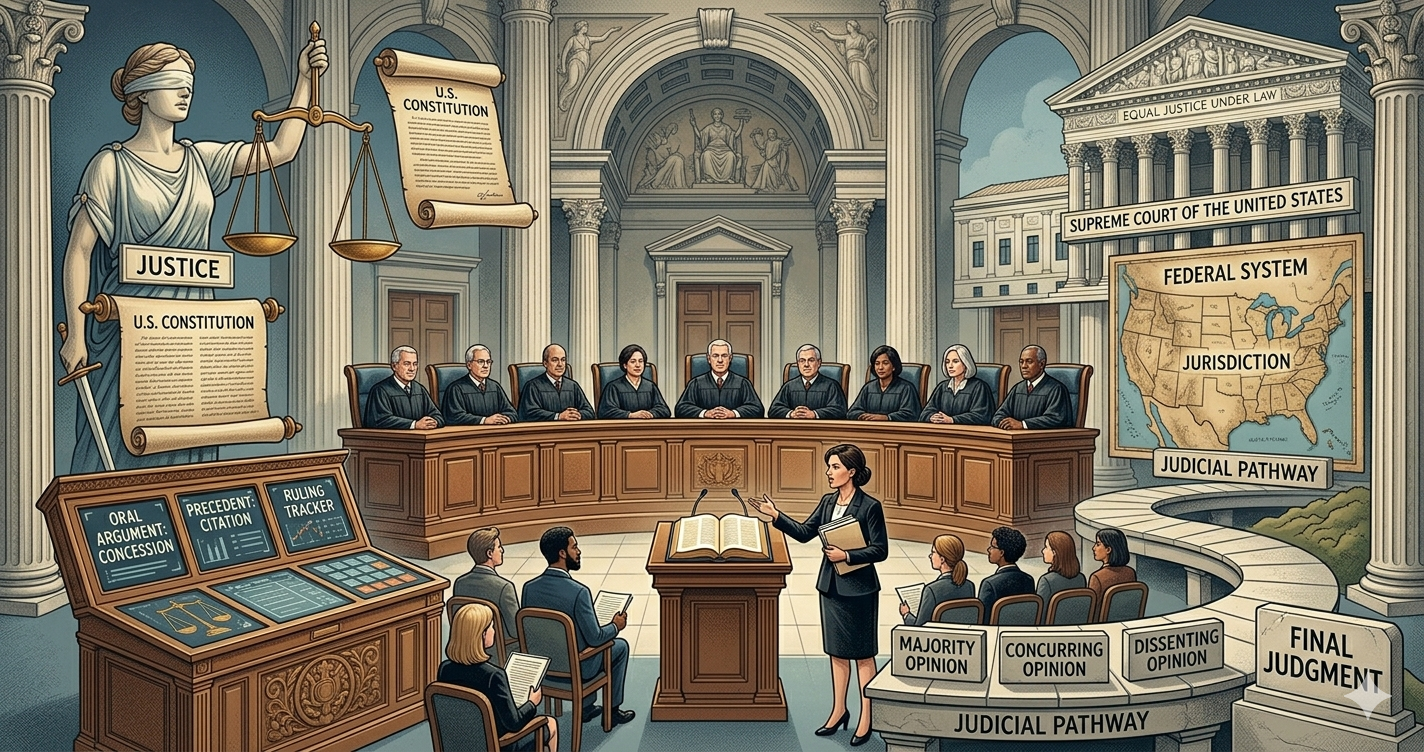
In the aftermath of the Supreme Court invalidating a Massachusetts restriction on free speech, many leftists have complained the Supreme Court's buffer zone is larger than the Massachusetts's unconstitutional one. What they do, though, is include part of the court complex as a buffer zone. The plaza in front of the building is considered part of the court, just as a parking lot would be part of an abortion clinic, and therefore no one would be entitled to stand on private property to protest. So, actually, the buffer zone in front of the Supreme Court, if you used the same logic applied to private property, is zero feet.
This is a little complicated since the Supreme Court is itself public property. But ask yourself if demonstrations should be allowed in the court itself. The answer is clearly no. After that, you just have to decide what's considered part of the court. If the court were private property, the plaza outside would certainly be considered part of the complex. This WSJ article touches on the logic, but doesn't explain it clearly enough in my opinion.